
__________________________________________
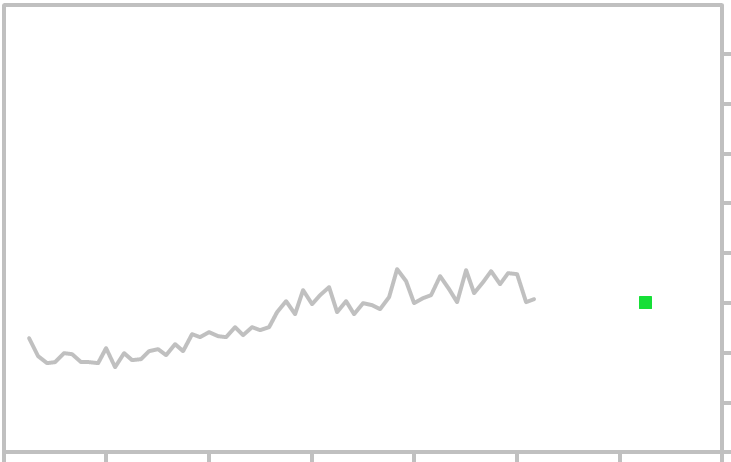
Monthly New US Privately Owned Housing Starts is plotted in gray. The forecast for the target month
is shown in green. Other links related to this economic indicator are below.
New US Privately Owned Housing Starts - 5 Year History
New US Privately Owned Housing Starts Forecast
Target Month
Forecast
HDTFA
Forecast for New US Privately Owned Housing
Starts for the target month indicated.
Measurement is in Thousands of Units
(seasonally adjusted annual rate).
February 2011
716
165
Updated Friday, March 5, 2010.
New Housing Starts Forecast
1500
1800
2100
1200
900
2400
600
300
0
New Housing Starts Forecast
U.S. Census Bureau
Historical New Housing Starts
Year
1000s
Year
1000s
Year
1000s
Year
1000s
1959
1960
1961
1962
1963
1964
1965
1966
1967
1968
1969
1970
1971
1972
1973
1974
1535
1256
1312
1459
1588
1540
1469
1167
1285
1504
1487
1435
2036
2361
2044
1332
1975
1976
1977
1978
1979
1980
1981
1982
1983
1984
1985
1986
1987
1988
1989
1990
1160
1535
1962
2001
1717
1300
1096
1057
1705
1766
1741
1812
1631
1488
1382
1203
1991
1992
1993
1994
1995
1996
1997
1998
1999
2000
2001
2002
2003
2004
2005
2006
1009
1201
1292
1446
1361
1469
1475
1621
1647
1573
1601
1710
1854
1950
2073
1812
2007
2008
2009
1341
903
553
Average Monthly New Housing Starts are shown in this table: 1959 to present
Commentary  2896
January, 2010 Data:

The forecast for Housing Starts is in the table at the top of this page. We are
forecasting that Housing Starts will be roughly 716 thousand units next
February. The table shows a HDTFA of 165 thousand units which suggests that
housing starts in February, 2011 could easily fall between 880 thousand units
and 551 thousand units. Links to Forecasts for many other economic indicators
may be found on the left side of this page.

Housing Starts for January, 2010 were 591 thousand units. That's 16 thousand
units higher than the December, 2009 level which was 575 thousand units. It is
103 thousand units higher than the January, 2009 level of 488 thousand units.  
The rise in Housing Starts from December to January indicates that the short
term Housing Starts trend has been up. If that trend continues, we should see a
housing starts level in February, 2010 that is close to 607 thousand units.

Over the last year housing starts have averaged 562 thousand units per month.
The average level over the last 10 years was 1528 thousand units.  Lower
Housing Starts over the last 12 months compared to the average levels over
the last 10 years serve as an indicator that the long term trend in the Housing
Starts is down. Expectations for housing starts should be adjusted accordingly.

ForecastChart.com's historical research covers Housing Starts data back to
January, 1959. Average housing starts during that period of history was 1513
thousand units per month. The highest level was 2494 thousand units. The
lowest oil level was 479 thousand units.  The high was attained in January, of
1972. The low was achieved in April of 2009.

This page provides a five year chart and a forecast for Housing Starts. For links
to longer term charts, look at the links under the five year chart (above). One
link opens a ten year chart. Another opens our longest term graph on Housing
Starts. Just one glance at our long term charts can provide tremendous insight
into the historical trends of the financial markets. The data table above
presents the history of US Housing Starts in numerical format.


Commentary  2286
December, 2009 Data:

The forecast for Housing Starts is in the table at the top of this page. We are
forecasting that Housing Starts will be roughly 558 thousand units next January.
The table shows a HDTFA of 128 thousand units which suggests that housing
starts in January, 2011 could easily fall between 686 thousand units and 430
thousand units. Links to Forecasts for many other economic indicators may be
found on the left side of this page.

Housing Starts for December, 2009 were 557 thousand units. That's 23
thousand units lower than the November, 2009 level which was 580 thousand
units. It is 1 thousand units higher than the December, 2008 level of 556
thousand units.  The fall in Housing Starts from November to December
indicates that the short term Housing Starts trend has been down. If that trend
continues, we should see a housing starts level in January, 2010 that is close to
534 thousand units.

Over the last year housing starts have averaged 552 thousand units per month.
The average level over the last 10 years was 1537 thousand units.  Lower
Housing Starts over the last 12 months compared to the average levels over
the last 10 years serve as an indicator that the long term trend in the Housing
Starts is down. Expectations for housing starts should be adjusted accordingly.

ForecastChart.com's historical research covers Housing Starts data back to
January, 1959. Average housing starts during that period of history was 1515
thousand units per month. The highest level was 2494 thousand units. The
lowest oil level was 479 thousand units.  The high was attained in January, of
1972. The low was achieved in April of 2009.

This page provides a five year chart and a forecast for Housing Starts. For links
to longer term charts, look at the links under the five year chart (above). One
link opens a ten year chart. Another opens our longest term graph on Housing
Starts. Just one glance at our long term charts can provide tremendous insight
into the historical trends of the financial markets. The data table above
presents the history of US Housing Starts in numerical format.


Commentary  2210
November, 2009 Data:

The forecast for Housing Starts is in the table at the top of this page. We are
forecasting that Housing Starts will be roughly 503 thousand units next
December. The table shows a HDTFA of 115 thousand units which suggests
that housing starts in December, 2010 could easily fall between 618 thousand
units and 388 thousand units. Links to Forecasts for many other economic
indicators may be found on the left side of this page.

Housing Starts for November, 2009 were 574 thousand units. That's 47
thousand units higher than the October, 2009 level which was 527 thousand
units. It is 81 thousand units lower than the November, 2008 level of 655
thousand units.  The rise in Housing Starts from October to November indicates
that the short term Housing Starts trend has been up. If that trend continues, we
should see a housing starts level in December, 2009 that is close to 621
thousand units.

Over the last year housing starts have averaged 552 thousand units per month.
The average level over the last 10 years was 1546 thousand units.  Lower
Housing Starts over the last 12 months compared to the average levels over
the last 10 years serve as an indicator that the long term trend in the Housing
Starts is down. Expectations for housing starts should be adjusted accordingly.

Our historical research covers Housing Starts data back to January, 1959.
Average housing starts during that period of history was 1516 thousand units
per month. The highest level was 2494 thousand units. The lowest oil level was
479 thousand units.  The high was attained in January, of 1972. The low was
achieved in April of 2009.

This page provides a five year chart and a forecast for Housing Starts. For links
to longer term charts, look at the links under the five year chart (above). One
link opens a ten year chart. Another opens our longest term graph on Housing
Starts. Just one glance at our long term charts can provide tremendous insight
into the historical trends of the financial markets. The data table above
presents the history of US Housing Starts in numerical format.


Commentary  2134
October, 2009 Data:

The forecast for Housing Starts is in the table at the top of this page. We are
forecasting that Housing Starts will be roughly 367 thousand units next
November. The table shows a HDTFA of 84 thousand units which suggests that
housing starts in November, 2010 could easily fall between 451 thousand units
and 283 thousand units. Links to Forecasts for many other economic indicators
may be found on the left side of this page.

Housing Starts for October, 2009 were 529 thousand units. That's 63 thousand
units lower than the September, 2009 level which was 592 thousand units. It is
234 thousand units lower than the October, 2008 level of 763 thousand units.  
The fall in Housing Starts from September to October indicates that the short
term Housing Starts trend has been down. If that trend continues, we should
see a housing starts level in November, 2009 that is close to 466 thousand
units.

Over the last year housing starts have averaged 559 thousand units per month.
The average level over the last 10 years was 1555 thousand units.  Lower
Housing Starts over the last 12 months compared to the average levels over
the last 10 years serve as an indicator that the long term trend in the Housing
Starts is down. Expectations for housing starts should be adjusted accordingly.

Our historical research covers Housing Starts data back to January, 1959.
Average housing starts during that period of history was 1518 thousand units
per month. The highest level was 2494 thousand units. The lowest oil level was
479 thousand units.  The high was attained in January, of 1972. The low was
achieved in April of 2009.

This page provides a five year chart and a forecast for Housing Starts. For links
to longer term charts, look at the links under the five year chart (above). One
link opens a ten year chart. Another opens our longest term graph on Housing
Starts. Just one glance at our long term charts can provide tremendous insight
into the historical trends of the financial markets. The data table above
presents the history of US Housing Starts in numerical format.


Commentary  1143
September, 2009 Data:

The forecast for Housing Starts is in the table at the top of this page. We are
forecasting that Housing Starts will be roughly 423 thousand units next October.
The table shows a HDTFA of 97 thousand units which suggests that housing
starts in October, 2010 could easily fall between 521 thousand units and 326
thousand units. Links to Forecasts for many other economic indicators may be
found on the left side of this page.

Housing Starts for September, 2009 were 590 thousand units. That's 3
thousand units higher than the August, 2009 level which was 587 thousand
units. It is 232 thousand units lower than the September, 2008 level of 822
thousand units.  The rise in Housing Starts from August to September indicates
that the short term Housing Starts trend has been up. If that trend continues, we
should see a housing starts level in October, 2009 that is close to 593
thousand units.

Over the last year housing starts have averaged 579 thousand units per month.
The average level over the last 10 years was 1564 thousand units.  Lower
Housing Starts over the last 12 months compared to the average levels over
the last 10 years serve as an indicator that the long term trend in the Housing
Starts is down. Expectations for housing starts should be adjusted accordingly.

Our historical research covers Housing Starts data back to January, 1959.
Average housing starts during that period of history was 1520 thousand units
per month. The highest level was 2494 thousand units. The lowest oil level was
479 thousand units.  The high was attained in January, of 1972. The low was
achieved in April of 2009.

This page provides a five year chart and a forecast for Housing Starts. For links
to longer term charts, look at the links under the five year chart (above). One
link opens a ten year chart. Another opens our longest term graph on Housing
Starts. Just one glance at our long term charts can provide tremendous insight
into the historical trends of the financial markets. The data table above
presents the history of US Housing Starts in numerical format.


Commentary  1067
August, 2009 Data:

The forecast for Housing Starts is in the table at the top of this page. We are
forecasting that Housing Starts will be roughly 421 thousand units next
September. The table shows a HDTFA of 97 thousand units which suggests
that housing starts in September, 2010 could easily fall between 518 thousand
units and 325 thousand units. Links to Forecasts for many other economic
indicators may be found on the left side of this page.

Housing Starts for August, 2009 were 598 thousand units. That's 9 thousand
units higher than the July, 2009 level which was 589 thousand units. It is 251
thousand units lower than the August, 2008 level of 849 thousand units.  The
rise in Housing Starts from July to August indicates that the short term Housing
Starts trend has been up. If that trend continues, we should see a housing
starts level in September, 2009 that is close to 607 thousand units.

Over the last year housing starts have averaged 599 thousand units per month.
The average level over the last 10 years was 1573 thousand units.  Lower
Housing Starts over the last 12 months compared to the average levels over
the last 10 years serve as an indicator that the long term trend in the Housing
Starts is down. Expectations for housing starts should be adjusted accordingly.

Our historical research covers Housing Starts data back to January, 1959.
Average housing starts during that period of history was 1521 thousand units
per month. The highest level was 2494 thousand units. The lowest oil level was
479 thousand units.  The high was attained in January, of 1972. The low was
achieved in April of 2009.

This page provides a five year chart and a forecast for Housing Starts. For links
to longer term charts, look at the links under the five year chart (above). One
link opens a ten year chart. Another opens our longest term graph on Housing
Starts. Just one glance at our long term charts can provide tremendous insight
into the historical trends of the financial markets. The data table above
presents the history of US Housing Starts in numerical format.


Commentary  991
July, 2009 Data:

The forecast for Housing Starts is in the table at the top of this page. We are
forecasting that Housing Starts will be roughly 362 thousand units next August.
The table shows a HDTFA of 83 thousand units which suggests that housing
starts in August, 2010 could easily fall between 445 thousand units and 279
thousand units. Links to Forecasts for many other economic indicators may be
found on the left side of this page.

Housing Starts for July, 2009 were 581 thousand units. That's 6 thousand units
lower than the June, 2009 level which was 587 thousand units. It is 352
thousand units lower than the July, 2008 level of 933 thousand units.  The fall in
Housing Starts from June to July indicates that the short term Housing Starts
trend has been down. If that trend continues, we should see a housing starts
level in August, 2009 that is close to 575 thousand units.

Over the last year housing starts have averaged 619 thousand units per month.
The average level over the last 10 years was 1582 thousand units.  Lower
Housing Starts over the last 12 months compared to the average levels over
the last 10 years serve as an indicator that the long term trend in the Housing
Starts is down. Expectations for housing starts should be adjusted accordingly.

Our historical research covers Housing Starts data back to January, 1959.
Average housing starts during that period of history was 1523 thousand units
per month. The highest level was 2494 thousand units. The lowest oil level was
479 thousand units.  The high was attained in January, of 1972. The low was
achieved in April of 2009.

This page provides a five year chart and a forecast for the Housing Starts. For
links to longer term charts, look at the links under the five year chart (above).
One link opens a ten year chart. Another opens our longest term graph on  
Housing Starts. Just one glance at our long term charts can provide
tremendous insight into the historical trends of the financial markets. The data
table above presents the history of US Housing Starts in numerical format.


Commentary  4
June, 2009 Data:

The forecast for Housing Starts is in the table at the top of this page. We are
forecasting that Housing Starts will be roughly 314 thousand units next July.
The table shows a HDTFA of 72 thousand units which suggests that housing
starts in July, 2010 could easily fall between 386 thousand units and 242
thousand units. Links to Forecasts for many other economic indicators may be
found on the left side of this page.

Housing Starts for June, 2009 were 582 thousand units. That's 20 thousand
units higher than the May, 2009 level which was 562 thousand units. It is 496
thousand units lower than the June, 2008 level of 1078 thousand units.  The
rise in Housing Starts from May to June provides evidence that the short term
Housing Starts trend is up. If that trend continues, we should see a housing
starts level in July, 2009 that is close to 602 thousand units.

Over the last year housing starts have averaged 649 thousand units per month.
 The average level over the last 10 years was 1591 thousand units.  Lower
Housing Starts over the last 12 months compared to the average levels over
the last 10 years serve as an indicator that the long term trend in the Housing
Starts is down. Expectations for housing starts should be adjusted accordingly.

Our historical research covers Housing Starts data back to January, 1959.
Average housing starts during that period of history was 1524 thousand units
per month. The highest level was 2494 thousand units. The lowest oil level was
479 thousand units.  The high was attained in January, of 1972. The low was
achieved in April of 2009.

This page provides a five year chart and a forecast for Housing Starts. For links
to longer term charts, look at the links under the five year chart (above). One
link opens a ten year chart. Another opens our longest term graph on Housing
Starts. Just one glance at our long term charts can provide tremendous insight
into the historical trends of the financial markets.


_____________________________________________________________
Home       About       Search      1000 Charts      Report a Problem with this Page
Site Map      Contact Us      Privacy Policy      Terms of Use/Disclosure     
                 SignalTrend Inc.  2008 - 2009, All Rights Reserved
Housing Starts Analysis & Forecast
Home        About Us
1/05         1/2006           1/2007            1/2008           1/2009           1/2010           1/2011            1/12