__________________________________________
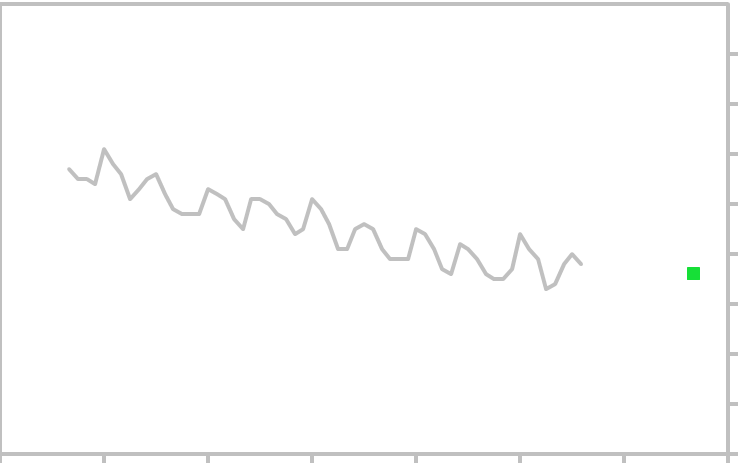
Monthly US National Unemployment rate is plotted in gray. The forecast for the target month is shown
in green. Other links related to this economic indicator are below.
US National Unemployment rate - 5 Year History
US National Unemployment rate Forecast
Target Month
Forecast
HDTFA
Forecast for US National Unemployment rate
for the target month indicated. Measurement
is in Percent (not seasonally adjusted).
August 2011
9.9%
1.8%
Updated Tuesday, August 24, 2010.
US Unemployment Rate Forecast
4%
5%
8%
US Unemployment Rate Forecast
U.S. Bureau of Labor Statistics Site
10 Year Chart - National Unemployment Rate
60 Year Graph - USA Unemployment Rate
11%
10%
7%
6%
9%
12%
US Unemployment Rate
Year
Percent
Year
Percent
Year
Percent
Year
Percent
1948
1949
1950
1951
1952
1953
1954
1955
1956
1957
1958
1959
1960
1961
1962
1963
1964
1965
1966
1967
3.8
6.1
5.2
3.3
3.0
2.9
5.6
4.4
4.1
4.3
6.8
5.5
5.5
6.7
5.6
5.6
5.2
4.5
3.8
3.8
1968
1969
1970
1971
1972
1973
1974
1975
1976
1977
1978
1979
1980
1981
1982
1983
1984
1985
1986
1987
3.6
3.5
5.0
6.0
5.6
4.9
5.6
8.5
7.7
7.1
6.1
5.9
7.2
7.6
9.7
9.6
7.5
7.2
7.0
6.2
1988
1989
1990
1991
1992
1993
1994
1995
1996
1997
1998
1999
2000
2001
2002
2003
2004
2005
2006
2007
5.5
5.3
5.6
6.9
7.5
6.9
6.1
5.6
5.4
4.9
4.5
4.2
4.0
4.7
5.8
6.0
5.5
5.1
4.6
4.6
2008
2009
5.8
9.3
Average US Unemployment Rate is shown in this table: 1948 to present
Real Estate Forecast
Stock Index Forecast
USA
California
Florida
New York
Texas
All 50 States...
Home Appreciation Rate
Search for Your City
Chicago, IL
Miami, FL
Phoenix, AZ
San Diego, CA
500 more...
CAC 40 (France)
DAX (Germany)
Dow Jones Industrial Avg.
FTSE 100 (UK)
Hang Seng (Hong Kong)
NASDAQ 100
Nikkei 225 (Japan)
Russell 2000
S&P 500
S&P Global
TSX Composite (Canada)
Wilshire 5000
more...
Home        About Us
1000 Financial Charts
British Pound to USD
Canadian Dollars to USD
Chinese Yuan to USD
Euro to US Dollar
Indian Rupee to USD
Japanese Yen to USD
Korean Won to USD
Mexican Peso to USD
Swiss Franc to USD
more...
Real Estate Indexes
Currency Exchange
Rate Forecasts
Economic Forecasts
30 Year Mortgage
15 Year Mortgage
10 Year Treasury
6 Month CD
Fed Funds
Prime Rate
more...
Crude Oil
GDP
Housing Starts
Inflation Rate
National Debt
Natural Gas
Unemployment Rate
more...
Interest Rate Forecasts
1/05         1/2006           1/2007            1/2008           1/2009           1/2010           1/2011            1/12
Boston Real Estate Market
Dallas Real Estate Market
Houston Real Estate Market
Miami Real Estate Market
New York Real Estate Market
Portland Real Estate Market
Seattle Real Estate Market
all 500 Cities...
Commentary  4417
July, 2010 Data:

The forecast for the US unemployment rate is in the table at the top of this
page. We are forecasting that US unemployment rates will be roughly 9.86%
over the next year. The table shows a HDTFA of 1.80% which suggests that US
inflation for the 12 months ending August, 2011 could easily fall between
11.66% and 8.06%. Links to Forecasts for many other economic indicators may
be found on the left side of this page.

The annual US unemployment rate in July, 2010 was 9.70%. That's 0.10%
percent higher than the June, 2010 unemployment rate of 9.60%. It is the same
as the July, 2009 rate, The rise in unemployment rates from June to July
indicates that the short term unemployment rate trend has been up. If that trend
continues, we should see an unemployment rate in August, 2010 that is close to
9.80%.

The US unemployment rate one year ago was 9.70%. The average rate over
the last year was 9.75%.  The average rate over the last 10 years was 5.87%.  
Higher rates over the last 12 months compared to the average rates over the
last 10 years serve as an indicator that the long term trend in the US
unemployment rate is up. Unemployment rate expectations should be adjusted
accordingly.

ForecastChart.com's historical research covers US unemployment rate data
back to January, 1948. The average annual unemployment rate during that
period of history was 5.69%. The highest rate was 10.80%. The lowest rate was
2.50%.  The high was attained in November of 1982. The low was achieved in
May of 1953. Recent rates experienced in July of 2010 are high relative to the
historical 5.69% average.

This page provides a five year chart and a twelve month forecast for US
unemployment rates. For links to more information on US unemployment rates,
look at the links under the five year chart (above). One link opens a ten year
chart. Another opens a sixty year graph of the US unemployment rate.


UNEMPLOYMENT RATES BY AGE AND SEX
(Not Seasonally Adjusted)

Unemployment Rates: Males 20 Years & Over
2009-08   9.4%
2009-09   9.5%
2009-10   9.6%
2009-11   9.7%
2009-12   10.4%
2010-01   11.6%
2010-02   11.5%
2010-03   11.2%
2010-04   10.0%
2010-05   9.4%
2010-06   9.4%
2010-07   9.2%

Unemployment Rates: Females 20 Years & Over
2009-08   8.3%
2009-09   8.0%
2009-10   7.8%
2009-11   7.6%
2009-12   7.6%
2010-01   8.0%
2010-02   8.0%
2010-03   7.9%
2010-04   7.7%
2010-05   7.8%
2010-06   8.0%
2010-07   8.6%

Unemployment Rates: Teenagers (16-19)
2009-08   24.2%
2009-09   25.8%
2009-10   25.6%
2009-11   26.6%
2009-12   24.8%
2010-01   26.9%
2010-02   25.8%
2010-03   25.3%
2010-04   23.9%
2010-05   26.8%
2010-06   29.0%
2010-07   26.5%

Unemployment Rates: Total U. S.
2009-08   9.6%
2009-09   9.5%
2009-10   9.5%
2009-11   9.4%
2009-12   9.7%
2010-01   10.6%
2010-02   10.4%
2010-03   10.2%
2010-04   9.5%
2010-05   9.3%
2010-06   9.6%
2010-07   9.7%


UNEMPLOYMENT RATES BY STATE
July, 2010, Seasonally Adjusted
3.6%        North Dakota
4.4%        South Dakota
4.7%        Nebraska
5.8%        New Hampshire
6.0%        Vermont
6.3%        Hawaii
6.5%        Kansas
6.7%        Wyoming
6.8%        Iowa
6.8%        Minnesota
6.9%        Oklahoma
7.0%        Virginia
7.1%        Maryland
7.2%        Louisiana
7.2%        Utah
7.3%        Montana
7.4%        Arkansas
7.7%        Alaska
7.8%        Wisconsin
8.0%        Colorado
8.1%        Maine
8.2%        New Mexico
8.2%        New York
8.2%        Texas
8.4%        Delaware
8.6%        West Virginia
8.8%        Idaho
8.9%        Connecticut
8.9%        Washington
9.0%        Massachusetts
9.2%        Missouri
9.3%        Pennsylvania
9.6%        Arizona
9.7%        Alabama
9.7%        New Jersey
9.8%        District Of Columbia
9.8%        North Carolina
9.8%        Tennessee
9.9%        Georgia
9.9%        Kentucky
10.2%      Indiana
10.3%      Illinois
10.3%      Ohio
10.6%      Oregon
10.8%      Mississippi
10.8%      South Carolina
11.5%      Florida
11.9%      Rhode Island
12.3%      California
13.1%      Michigan
14.3%      Nevada


Commentary  3807
June, 2010 Data:

The forecast for the US unemployment rate is in the table at the top of this
page. We are forecasting that US unemployment rates will be roughly 10.73%
over the next year. The table shows a HDTFA of 1.96% which suggests that US
inflation for the 12 months ending July, 2011 could easily fall between 12.69%
and 8.77%. Links to Forecasts for many other economic indicators may be
found on the left side of this page.

The annual US unemployment rate in June, 2010 was 9.60%. That's 0.30%
percent higher than the May, 2010 unemployment rate of 9.30%. It is 0.10%
percent lower than the June, 2009 unemployment rate of 9.70%.  The rise in
unemployment rates from May to June indicates that the short term
unemployment rate trend has been up. If that trend continues, we should see
an unemployment rate in July, 2010 that is close to 9.90%.

The US unemployment rate one year ago was 9.70%. The average rate over
the last year was 9.75%.  The average rate over the last 10 years was 5.83%.  
Higher rates over the last 12 months compared to the average rates over the
last 10 years serve as an indicator that the long term trend in the US
unemployment rate is up. Unemployment rate expectations should be adjusted
accordingly.

ForecastChart.com's historical research covers US unemployment rate data
back to January, 1948. The average annual unemployment rate during that
period of history was 5.69%. The highest rate was 10.80%. The lowest rate was
2.50%.  The high was attained in November of 1982. The low was achieved in
May of 1953. Recent rates experienced in June of 2010 are high relative to the
historical 5.69% average.

This page provides a five year chart and a twelve month forecast for US
unemployment rates. For links to more information on US unemployment rates,
look at the links under the five year chart (above). One link opens a ten year
chart. Another opens a sixty year graph of the US unemployment rate.


UNEMPLOYMENT RATES BY AGE AND SEX
(Not Seasonally Adjusted)

Unemployment Rates: Males 20 Years & Over
2009-07   9.4%
2009-08   9.4%
2009-09   9.5%
2009-10   9.6%
2009-11   9.7%
2009-12   10.4%
2010-01   11.6%
2010-02   11.5%
2010-03   11.2%
2010-04   10.0%
2010-05   9.4%
2010-06   9.4%

Unemployment Rates: Females 20 Years & Over
2009-07   8.4%
2009-08   8.3%
2009-09   8.0%
2009-10   7.8%
2009-11   7.6%
2009-12   7.6%
2010-01   8.0%
2010-02   8.0%
2010-03   7.9%
2010-04   7.7%
2010-05   7.8%
2010-06   8.0%

Unemployment Rates: Teenagers (16-19)
2009-07   24.8%
2009-08   24.2%
2009-09   25.8%
2009-10   25.6%
2009-11   26.6%
2009-12   24.8%
2010-01   26.9%
2010-02   25.8%
2010-03   25.3%
2010-04   23.9%
2010-05   26.8%
2010-06   29.0%

Unemployment Rates: Total U. S.
2009-07   9.7%
2009-08   9.6%
2009-09   9.5%
2009-10   9.5%
2009-11   9.4%
2009-12   9.7%
2010-01   10.6%
2010-02   10.4%
2010-03   10.2%
2010-04   9.5%
2010-05   9.3%
2010-06   9.6%


UNEMPLOYMENT RATES BY STATE
June, 2010, Seasonally Adjusted
3.6%        North Dakota
4.5%        South Dakota
4.8%        Nebraska
5.9%        New Hampshire
6.0%        Vermont
6.3%        Hawaii
6.5%        Kansas
6.8%        Iowa
6.8%        Minnesota
6.8%        Oklahoma
6.8%        Wyoming
7.0%        Louisiana
7.0%        Virginia
7.1%        Maryland
7.2%        Utah
7.3%        Montana
7.5%        Arkansas
7.9%        Alaska
7.9%        Wisconsin
8.0%        Colorado
8.0%        Maine
8.2%        New Mexico
8.2%        New York
8.2%        Texas
8.5%        Delaware
8.5%        West Virginia
8.8%        Connecticut
8.8%        Idaho
8.9%        Washington
9.0%        Massachusetts
9.1%        Missouri
9.2%        Pennsylvania
9.6%        Arizona
9.6%        New Jersey
10.0%      District Of Columbia
10.0%      Georgia
10.0%      Kentucky
10.0%      North Carolina
10.1%      Indiana
10.1%      Tennessee
10.3%      Alabama
10.4%      Illinois
10.5%      Ohio
10.5%      Oregon
10.7%      South Carolina
11.0%      Mississippi
11.4%      Florida
12.0%      Rhode Island
12.3%      California
13.2%      Michigan
14.2%      Nevada


Commentary  3655
April, 2010 Data:

The forecast for the US unemployment rate is in the table at the top of this
page. We are forecasting that US unemployment rates will be roughly 11.50%
over the next year. The table shows a HDTFA of 2.10% which suggests that US
inflation for the 12 months ending May, 2011 could easily fall between 13.60%
and 9.40%. Links to Forecasts for many other economic indicators may be
found on the left side of this page.

The annual US unemployment rate in April, 2010 was 9.50%. That's 0.70%
percent lower than the March, 2010 unemployment rate of 10.20%. It is 0.90%
percent higher than the April, 2009 unemployment rate of 8.60%.  The fall in
unemployment rates from March to April indicates that the short term
unemployment rate trend has been down. If that trend continues, we should see
an unemployment rate in May, 2010 that is close to 8.80%.

The US unemployment rate one year ago was 8.60%. The average rate over
the last year was 9.74%.  The average rate over the last 10 years was 5.74%.  
Higher rates over the last 12 months compared to the average rates over the
last 10 years serve as an indicator that the long term trend in the US
unemployment rate is up. Unemployment rate expectations should be adjusted
accordingly.

ForecastChart.com's historical research covers US unemployment rate data
back to January, 1948. The average annual unemployment rate during that
period of history was 5.68%. The highest rate was 10.80%. The lowest rate was
2.50%.  The high was attained in November of 1982. The low was achieved in
May of 1953. Recent rates experienced in April of 2010 are high relative to the
historical 5.68% average.

This page provides a five year chart and a twelve month forecast for US
unemployment rates. For links to more information on US unemployment rates,
look at the links under the five year chart (above). One link opens a ten year
chart. Another opens a sixty year graph of the US unemployment rate.


UNEMPLOYMENT RATES BY AGE AND SEX
(Not Seasonally Adjusted)

Unemployment Rates: Males 20 Years & Over
2009-05   9.5%
2009-06   9.5%
2009-07   9.4%
2009-08   9.4%
2009-09   9.5%
2009-10   9.6%
2009-11   9.7%
2009-12   10.4%
2010-01   11.6%
2010-02   11.5%
2010-03   11.2%
2010-04   10.0%

Unemployment Rates: Females 20 Years & Over
2009-05   7.2%
2009-06   7.9%
2009-07   8.4%
2009-08   8.3%
2009-09   8.0%
2009-10   7.8%
2009-11   7.6%
2009-12   7.6%
2010-01   8.0%
2010-02   8.0%
2010-03   7.9%
2010-04   7.7%

Unemployment Rates: Teenagers (16-19)
2009-05   23.6%
2009-06   27.8%
2009-07   24.8%
2009-08   24.2%
2009-09   25.8%
2009-10   25.6%
2009-11   26.6%
2009-12   24.8%
2010-01   26.9%
2010-02   25.8%
2010-03   25.3%
2010-04   23.9%

Unemployment Rates: Total U. S.
2009-05   9.1%
2009-06   9.7%
2009-07   9.7%
2009-08   9.6%
2009-09   9.5%
2009-10   9.5%
2009-11   9.4%
2009-12   9.7%
2010-01   10.6%
2010-02   10.4%
2010-03   10.2%
2010-04   9.5%


UNEMPLOYMENT RATES BY STATE
April, 2010, Seasonally Adjusted
3.8%        North Dakota
4.7%        South Dakota
5.0%        Nebraska
6.4%        Vermont
6.5%        Kansas
6.6%        Oklahoma
6.7%        Hawaii
6.7%        Louisiana
6.7%        New Hampshire
6.9%        Iowa
7.1%        Montana
7.1%        Wyoming
7.2%        Minnesota
7.2%        Virginia
7.3%        Utah
7.5%        Maryland
7.8%        Arkansas
8.0%        Colorado
8.1%        Maine
8.3%        Texas
8.4%        Alaska
8.4%        New York
8.5%        Wisconsin
8.7%        New Mexico
9.0%        Connecticut
9.0%        Delaware
9.0%        Pennsylvania
9.1%        Idaho
9.2%        Massachusetts
9.2%        Washington
9.2%        West Virginia
9.4%        Missouri
9.5%        Arizona
9.8%        New Jersey
10.0%      Indiana
10.4%      Georgia
10.5%      Tennessee
10.6%      Kentucky
10.6%      Oregon
10.8%      North Carolina
10.9%      Ohio
11.0%      Alabama
11.0%      District Of Columbia
11.2%      Illinois
11.5%      Mississippi
11.6%      South Carolina
12.0%      Florida
12.5%      Rhode Island
12.6%      California
13.7%      Nevada
14.0%      Michigan


Commentary  3045
March, 2010 Data:

The forecast for the US unemployment rate is in the table at the top of this
page. We are forecasting that US unemployment rates will be roughly 10.92%
over the next year. The table shows a HDTFA of 2.00% which suggests that US
inflation for the 12 months ending April, 2011 could easily fall between 12.92%
and 8.92%. Links to Forecasts for many other economic indicators may be
found on the left side of this page.

The annual US unemployment rate in March, 2010 was 10.20%. That's 0.20%
percent lower than the February, 2010 unemployment rate of 10.40%. It is
1.20% percent higher than the March, 2009 unemployment rate of 9.00%.  The
fall in unemployment rates from February to March indicates that the short term
unemployment rate trend has been down. If that trend continues, we should see
an unemployment rate in April, 2010 that is close to 10.00%.

The US unemployment rate one year ago was 9.00%. The average rate over
the last year was 9.67%.  The average rate over the last 10 years was 5.69%.  
Higher rates over the last 12 months compared to the average rates over the
last 10 years serve as an indicator that the long term trend in the US
unemployment rate is up. Unemployment rate expectations should be adjusted
accordingly.

ForecastChart.com's historical research covers US unemployment rate data
back to January, 1948. The average annual unemployment rate during that
period of history was 5.67%. The highest rate was 10.80%. The lowest rate was
2.50%.  The high was attained in November of 1982. The low was achieved in
May of 1953. Recent rates experienced in March of 2010 are high relative to
the historical 5.67% average.

This page provides a five year chart and a twelve month forecast for US
unemployment rates. For links to more information on US unemployment rates,
look at the links under the five year chart (above). One link opens a ten year
chart. Another opens a sixty year graph of the US unemployment rate.


UNEMPLOYMENT RATES BY AGE AND SEX
(Not Seasonally Adjusted)

Unemployment Rates: Males 20 Years & Over
2009-04   9.3%
2009-05   9.5%
2009-06   9.5%
2009-07   9.4%
2009-08   9.4%
2009-09   9.5%
2009-10   9.6%
2009-11   9.7%
2009-12   10.4%
2010-01   11.6%
2010-02   11.5%
2010-03   11.2%

Unemployment Rates: Females 20 Years & Over
2009-04   6.7%
2009-05   7.2%
2009-06   7.9%
2009-07   8.4%
2009-08   8.3%
2009-09   8.0%
2009-10   7.8%
2009-11   7.6%
2009-12   7.6%
2010-01   8.0%
2010-02   8.0%
2010-03   7.9%

Unemployment Rates: Teenagers (16-19)
2009-04   20.9%
2009-05   23.6%
2009-06   27.8%
2009-07   24.8%
2009-08   24.2%
2009-09   25.8%
2009-10   25.6%
2009-11   26.6%
2009-12   24.8%
2010-01   26.9%
2010-02   25.8%
2010-03   25.3%

Unemployment Rates: Total U. S.
2009-04   8.6%
2009-05   9.1%
2009-06   9.7%
2009-07   9.7%
2009-08   9.6%
2009-09   9.5%
2009-10   9.5%
2009-11   9.4%
2009-12   9.7%
2010-01   10.6%
2010-02   10.4%
2010-03   10.2%


UNEMPLOYMENT RATES BY STATE
March, 2010, Seasonally Adjusted
4.0%        North Dakota
4.8%        South Dakota
5.0%        Nebraska
6.5%        Kansas
6.5%        Vermont
6.6%        Oklahoma
6.8%        Iowa
6.9%        Hawaii
6.9%        Louisiana
7.0%        New Hampshire
7.1%        Montana
7.2%        Utah
7.3%        Wyoming
7.4%        Minnesota
7.4%        Virginia
7.7%        Maryland
7.8%        Arkansas
7.9%        Colorado
8.2%        Maine
8.2%        Texas
8.6%        Alaska
8.6%        New York
8.8%        New Mexico
8.8%        Wisconsin
9.0%        Pennsylvania
9.2%        Connecticut
9.2%        Delaware
9.3%        Massachusetts
9.4%        Idaho
9.5%        Missouri
9.5%        Washington
9.5%        West Virginia
9.6%        Arizona
9.8%        New Jersey
9.9%        Indiana
10.6%      Georgia
10.6%      Oregon
10.6%      Tennessee
10.7%      Kentucky
11.0%      Alabama
11.0%      Ohio
11.1%      North Carolina
11.5%      Illinois
11.5%      Mississippi
11.6%      District Of Columbia
12.2%      South Carolina
12.3%      Florida
12.6%      California
12.6%      Rhode Island
13.4%      Nevada
14.1%      Michigan


Commentary  2969
February, 2010 Data:

The forecast for the US unemployment rate is in the table at the top of this
page. We are forecasting that US unemployment rates will be roughly 11.74%
over the next year. The table shows a HDTFA of 2.15% which suggests that US
inflation for the 12 months ending March, 2011 could easily fall between
13.90% and 9.59%. Links to Forecasts for many other economic indicators may
be found on the left side of this page.

The annual US unemployment rate in February, 2010 was 10.40%. That's
0.20% percent lower than the January, 2010 unemployment rate of 10.60%. It is
1.50% percent higher than the February, 2009 unemployment rate of 8.90%.  
The fall in unemployment rates from January to February indicates that the
short term unemployment rate trend has been down. If that trend continues, we
should see an unemployment rate in March, 2010 that is close to 10.20%.

The US unemployment rate one year ago was 8.90%. The average rate over
the last year was 9.57%.  The average rate over the last 10 years was 5.64%.  
Higher rates over the last 12 months compared to the average rates over the
last 10 years serve as an indicator that the long term trend in the US
unemployment rate is up. Unemployment rate expectations should be adjusted
accordingly.

ForecastChart.com's historical research covers US unemployment rate data
back to January, 1948. The average annual unemployment rate during that
period of history was 5.67%. The highest rate was 10.80%. The lowest rate was
2.50%.  The high was attained in November of 1982. The low was achieved in
May of 1953. Recent rates experienced in February of 2010 are high relative to
the historical 5.67% average.

This page provides a five year chart and a twelve month forecast for US
unemployment rates. For links to more information on US unemployment rates,
look at the links under the five year chart (above). One link opens a ten year
chart. Another opens a sixty year graph of the US unemployment rate.


UNEMPLOYMENT RATES BY AGE AND SEX
(Not Seasonally Adjusted)

Unemployment Rates: Males 20 Years & Over
2009-03   9.9%
2009-04   9.3%
2009-05   9.5%
2009-06   9.5%
2009-07   9.4%
2009-08   9.4%
2009-09   9.5%
2009-10   9.6%
2009-11   9.7%
2009-12   10.4%
2010-01   11.6%
2010-02   11.5%

Unemployment Rates: Females 20 Years & Over
2009-03   6.9%
2009-04   6.7%
2009-05   7.2%
2009-06   7.9%
2009-07   8.4%
2009-08   8.3%
2009-09   8.0%
2009-10   7.8%
2009-11   7.6%
2009-12   7.6%
2010-01   8.0%
2010-02   8.0%

Unemployment Rates: Teenagers (16-19)
2009-03   21.5%
2009-04   20.9%
2009-05   23.6%
2009-06   27.8%
2009-07   24.8%
2009-08   24.2%
2009-09   25.8%
2009-10   25.6%
2009-11   26.6%
2009-12   24.8%
2010-01   26.9%
2010-02   25.8%

Unemployment Rates: Total U. S.
2009-03   9.0%
2009-04   8.6%
2009-05   9.1%
2009-06   9.7%
2009-07   9.7%
2009-08   9.6%
2009-09   9.5%
2009-10   9.5%
2009-11   9.4%
2009-12   9.7%
2010-01   10.6%
2010-02   10.4%


UNEMPLOYMENT RATES BY STATE
January, 2010, Seasonally Adjusted
4.2%        North Dakota
4.6%        Nebraska
4.8%        South Dakota
6.4%        Kansas
6.6%        Iowa
6.7%        Oklahoma
6.7%        Vermont
6.8%        Montana
6.8%        Utah
6.9%        Hawaii
6.9%        Virginia
7.0%        New Hampshire
7.3%        Minnesota
7.4%        Colorado
7.4%        Louisiana
7.5%        Maryland
7.6%        Arkansas
7.6%        Wyoming
8.2%        Maine
8.2%        Texas
8.5%        Alaska
8.5%        New Mexico
8.7%        Wisconsin
8.8%        New York
8.8%        Pennsylvania
9.0%        Connecticut
9.0%        Delaware
9.2%        Arizona
9.3%        Idaho
9.3%        Washington
9.3%        West Virginia
9.5%        Massachusetts
9.5%        Missouri
9.7%        Indiana
9.9%        New Jersey
10.4%      Georgia
10.7%      Kentucky
10.7%      Oregon
10.7%      Tennessee
10.8%      Ohio
10.9%      Mississippi
11.1%      Alabama
11.1%      North Carolina
11.3%      Illinois
11.9%      Florida
12.0%      District Of Columbia
12.5%      California
12.6%      South Carolina
12.7%      Rhode Island
13.0%      Nevada
14.3%      Michigan


Commentary  2893
January, 2010 Data:

The annual US unemployment rate in January, 2010 was 10.60%. That's 0.90%
percent higher than the December, 2009 unemployment rate of 9.70%. It is
2.10% percent higher than the January, 2009 unemployment rate of 8.50%.  
The rise in unemployment rates from December to January indicates that the
short term unemployment rate trend has been up. If that trend continues, we
should see an unemployment rate in February, 2010 that is close to 11.50%.

The US unemployment rate one year ago was 8.50%. The average rate over
the last year was 9.44%.  The average rate over the last 10 years was 5.59%.  
Higher rates over the last 12 months compared to the average rates over the
last 10 years serve as an indicator that the long term trend in the US
unemployment rate is up. Unemployment rate expectations should be adjusted
accordingly.

ForecastChart.com's historical research covers US unemployment rate data
back to January, 1948. The average annual unemployment rate during that
period of history was 5.66%. The highest rate was 10.80%. The lowest rate was
2.50%.  The high was attained in November of 1982. The low was achieved in
May of 1953. Recent rates experienced in January of 2010 are high relative to
the historical 5.66% average.

This page provides a sixty year graph for US unemployment rates. For links to
more information on US unemployment rates, look at the links under the sixty
year chart (above). One link opens a ten year chart. Another opens a twelve
month forecast on the US unemployment rate.


Commentary  2283
December, 2009 Data:

The annual US unemployment rate in December, 2009 was 9.70%. That's
0.30% percent higher than the November, 2009 unemployment rate of 9.40%. It
is 2.60% percent higher than the December, 2008 unemployment rate of
7.10%.  The rise in unemployment rates from November to December indicates
that the short term unemployment rate trend has been up. If that trend
continues, we should see an unemployment rate in January, 2010 that is close
to 10.00%.

The US unemployment rate one year ago was 7.10%. The average rate over
the last year was 9.27%.  The average rate over the last 10 years was 5.54%.  
Higher rates over the last 12 months compared to the average rates over the
last 10 years serve as an indicator that the long term trend in the US
unemployment rate is up. Unemployment rate expectations should be adjusted
accordingly.

ForecastChart.com's historical research covers US unemployment rate data
back to January, 1948. The average annual unemployment rate during that
period of history was 5.65%. The highest rate was 10.80%. The lowest rate was
2.50%.  The high was attained in November of 1982. The low was achieved in
May of 1953. Recent rates experienced in December of 2009 are high relative
to the historical 5.65% average.

This page provides a sixty year graph for US unemployment rates. For links to
more information on US unemployment rates, look at the links under the sixty
year chart (above). One link opens a ten year chart. Another opens a twelve
month forecast on the US unemployment rate.


Commentary  2207
November, 2009 Data:

The annual US unemployment rate in November, 2009 was 9.40%. That's
0.10% percent lower than the October, 2009 unemployment rate of 9.50%. It is
2.90% percent higher than the November, 2008 unemployment rate of 6.50%.  
The fall in unemployment rates from October to November indicates that the
short term unemployment rate trend has been down. If that trend continues, we
should see an unemployment rate in December, 2009 that is close to 9.30%.

The US unemployment rate one year ago was 6.50%. The average rate over
the last year was 9.05%.  The average rate over the last 10 years was 5.49%.  
Higher rates over the last 12 months compared to the average rates over the
last 10 years serve as an indicator that the long term trend in the US
unemployment rate is up. Unemployment rate expectations should be adjusted
accordingly.

Our historical research covers US unemployment rate data back to January,
1922. The average annual unemployment rate during that period of history was
5.65%. The highest rate was 10.80%. The lowest rate was 2.50%.  The high
was attained in November of 1982. The low was achieved in May of 1953.
Recent rates experienced in November of 2009 are high relative to the
historical 5.65% average.

This page provides a sixty year graph for US unemployment rates. For links to
more information on US unemployment rates, look at the links under the sixty
year chart (above). One link opens a ten year chart. Another opens a twelve
month forecast on the US unemployment rate.


Commentary  2131
October, 2009 Data:

The annual US unemployment rate in October, 2009 was 9.50%. That's the
same as the September, 2009 rate, It is 3.40% percent higher than the
October, 2008 unemployment rate of 6.10%.  The sideways movement in
unemployment rates from September to October indicates that the short term
employment trend has been flat. If that trend continues, we should see an
unemployment rate in November, 2009 that is close to 9.50%.

The US unemployment rate one year ago was 6.10%. The average rate over
the last year was 8.81%.  The average rate over the last 10 years was 5.44%.  
Higher rates over the last 12 months compared to the average rates over the
last 10 years serve as an indicator that the long term trend in the US
unemployment rate is up. Unemployment rate expectations should be adjusted
accordingly.

Our historical research covers US unemployment rate data back to January,
1922. The average annual unemployment rate during that period of history was
5.64%. The highest rate was 10.80%. The lowest rate was 2.50%.  The high
was attained in November of 1982. The low was achieved in May of 1953.
Recent rates experienced in October of 2009 are high relative to the historical
5.64% average.

This page provides a sixty year graph for US unemployment rates. For links to
more information on US unemployment rates, look at the links under the sixty
year chart (above). One link opens a ten year chart. Another opens a twelve
month forecast on the US unemployment rate.


Commentary  1140
September, 2009 Data:

The annual US unemployment rate in September, 2009 was 9.50%. That's
0.10% percent lower than the August, 2009 unemployment rate of 9.60%. It is
3.50% percent higher than the September, 2008 unemployment rate of 6.00%.  
The fall in unemployment rates from August to September indicates that the
short term unemployment rate trend has been down. If that trend continues, we
should see an unemployment rate in October, 2009 that is close to 9.40%.

The US unemployment rate one year ago was 6.00%. The average rate over
the last year was 8.53%.  The average rate over the last 10 years was 5.39%.  
Higher rates over the last 12 months compared to the average rates over the
last 10 years serve as an indicator that the long term trend in the US
unemployment rate is up. Unemployment rate expectations should be adjusted
accordingly.

Our historical research covers US unemployment rate data back to January,
1922. The average annual unemployment rate during that period of history was
5.64%. The highest rate was 10.80%. The lowest rate was 2.50%.  The high
was attained in November of 1982. The low was achieved in May of 1953.
Recent rates experienced in September of 2009 are high relative to the
historical 5.64% average.

This page provides a sixty year graph for US unemployment rates. For links to
more information on US unemployment rates, look at the links under the sixty
year chart (above). One link opens a ten year chart. Another opens a twelve
month forecast on the US unemployment rate.


Commentary  1064
August, 2009 Data:

The annual US unemployment rate in August, 2009 was 9.60%. That's 0.10%
percent lower than the July, 2009 unemployment rate of 9.70%. It is 3.50%
percent higher than the August, 2008 unemployment rate of 6.10%.  The fall in
unemployment rates from July to August indicates that the short term
unemployment rate trend has been down. If that trend continues, we should see
an unemployment rate in September, 2009 that is close to 9.50%.

The US unemployment rate one year ago was 6.10%. The average rate over
the last year was 8.23%.  The average rate over the last 10 years was 5.35%.  
Higher rates over the last 12 months compared to the average rates over the
last 10 years serve as an indicator that the long term trend in the US
unemployment rate is up. Unemployment rate expectations should be adjusted
accordingly.

Our historical research covers US unemployment rate data back to January,
1922. The average annual unemployment rate during that period of history was
5.63%. The highest rate was 10.80%. The lowest rate was 2.50%.  The high
was attained in November of 1982. The low was achieved in May of 1953.
Recent rates experienced in August of 2009 are high relative to the historical
5.63% average.

This page provides a sixty year graph for US unemployment rates. For links to
more information on US unemployment rates, look at the links under the sixty
year chart (above). One link opens a ten year chart. Another opens a twelve
month forecast on the US unemployment rate.


Commentary  988
July, 2009 Data:

The annual US unemployment rate in July, 2009 was 9.70%. That's the same as
the June, 2009 rate, It is 3.70% percent higher than the July, 2008
unemployment rate of 6.00%.  The sideways movement in unemployment rates
from June to July indicates that the short term employment trend has been flat.
If that trend continues, we should see an unemployment rate in August, 2009
that is close to 9.70%.

The US unemployment rate one year ago was 6.00%. The average rate over
the last year was 7.94%.  The average rate over the last 10 years was 5.30%.  
Higher rates over the last 12 months compared to the average rates over the
last 10 years serve as an indicator that the long term trend in the US
unemployment rate is up. Unemployment rate expectations should be adjusted
accordingly.

Our historical research covers US unemployment rate data back to January,
1922. The average annual unemployment rate during that period of history was
5.63%. The highest rate was 10.80%. The lowest rate was 2.50%.  The high
was attained in November of 1982. The low was achieved in May of 1953.
Recent rates experienced in July of 2009 are high relative to the historical
5.63% average.

This page provides a sixty year graph for US unemployment rates. For links to
more information on US unemployment rates, look at the links under the sixty
year chart (above). One link opens a ten year chart. Another opens a twelve
month forecast on the US unemployment rate.


June, 2009 Data:
The annual US unemployment rate in June, 2009 was 9.70%. That's 0.60%
percent higher than the May, 2009 unemployment rate of 9.10%. It is 4.00%
percent higher than the June, 2008 unemployment rate of 5.70%.  The rise in
unemployment rates from May to June provides evidence that the short term
unemployment rate trend is up. If that trend continues, we should see an
unemployment rate in July, 2009 that is close to 10.30%.

The US unemployment rate one year ago was 5.70%. The average rate over
the last year was 7.63%.  The average rate over the last 10 years was 5.26%.  
Higher rates over the last 12 months compared to the average rates over the
last 10 years serve as an indicator that the long term trend in the US
unemployment rate is up. Unemployment rate expectations should be adjusted
accordingly.

Our historical research covers US unemployment rate data back to January,
1922. The average annual unemployment rate during that period of history was
5.62%. The highest rate was 10.80%. The lowest rate was 2.50%.  The high
was attained in November of 1982. The low was achieved in May of 1953.
Recent rates experienced in June of 2009 are high relative to the historical
5.62% average.

This page provides a sixty year graph for US unemployment rates. For links to
more information on US unemployment rates, look at the links under the sixty
year chart (above). One link opens a ten year chart. Another opens a twelve
month forecast on the US unemployment rate.


_____________________________________________________________
Home       About       Search      1000 Charts      Report a Problem with this Page
Site Map      Contact Us      Privacy Policy      Terms of Use/Disclosure     

SignalTrend Inc.  2008 - 2009, All Rights Reserved
Current Unemployment Rate News:
A note of encouragement from the Editor:

After my son turned sixteen, I told him it was time to get a job. It was summer
and jobs were hard to find. The unemployment rate was about 6% at the time.
But the unemployment rate for teenagers was 19.5%! The summer is the
hardest time of the year for a teenager to find a job. The kids who held the jobs
during the school year want more hours, since school is out and they have
more time on their hands. There is also an increase in applications from the
students who didn't work during the school year but want a summer job.
On a
Monday, I told my 16 year old to apply for ten jobs every day
until he got
one. He said he couldn't come up with ten places to apply.

He applied for ten jobs per day for five days.
He received a job on
application number forty-five
, the following Friday. He was a busboy at a
pizza parlor that summer.

My son graduated from college in May of 2009. The economy was in turmoil.
The unemployment rate was nearly 10%. The seniors in his class were not
finding jobs.  This is what I told him:

“I lived through times like these during the Oil & Gas and Real Estate
Depression that occurred in Texas during the 1980’s. That’s when oil prices fell
to $9 per barrel!  The Texas unemployment rate rose to 9.3%. Almost every
major Texas bank was unable to continue and was taken over by an out of state
bank. Most of the companies in my industry did not survive.”   I said…
“Expect to call one thousand companies to find a job!”

He contacted about three companies per day. Most were not hiring. Many
laughed when he asked if they were hiring. He applied to those which were
accepting applications. He lived like a Gypsy on a shoestring, expected success
and never asked me for a penny.
It took two hundred phone calls to find a
job,
in his field, with a fast growing company that has a wonderful corporate
environment. The job was three hundred miles from his preferred location, but
he loves his job! The search took two months.

What’s the lesson? Many become discouraged after a series of failed attempts
and stop trying. Never give up! Expect it to be hard. Expect success.

If you need free help with discouragement, click
here.


J. C. Phillips
Editor of ForecastChart.com
Are You Unemployed?
Market Trend Research
High Dividend Stocks
Home Appreciation Rates
Great Depression Stock Chart
Mortgage Terms Glossary
Dow Jones Indicators